http://panafa.net/articles/fishing-food-security-africa-blue-frontier
Fishing for Food Security: Can Africa Scale Its Blue Frontier?
- 20.11.2026, PANAFA
2026-11-20T04:13:29
2026-11-20T04:18:44
Fishing
Aquaculture
FAO
Tanzania
Food Security
Kenya
Ghana
/html/head/meta[@name='og:title']/@content
/html/head/meta[@name='og:description']/@content
http://panafa.net/files/entries/5-Fishing.jpg
Thirty-eight African countries look out onto the sea or the ocean, and the continent’s coastline stretches roughly 30,500 km (18,950 miles): by any geographic measure, Africa is a maritime continent. Yet when it comes to feeding itself from those waters, the numbers reveal a striking paradox. How big is Africa’s aquaculture industry? Africa’s aquaculture sector is the fastest growing among all the world’s regions: it has expanded more than five-fold since 2000, reaching approximately 2.5 million tons by 2022. Yet the continent still accounts for under 2 percent of global aquaculture volume. Per capita fish consumption is around 9 kg annually, less than half of the global average of 21 kg. More troubling still, there is a growing gap between production and consumption: merely to maintain current consumption levels, Africa’s aquatic food supply must grow by 74 percent by 2050. What are the challenges facing Africa’s fishing sector? The geography of African fish farming is highly concentrated. In 2024, Egypt alone produced 1.6 million tons of farmed aquatic animals – 66 percent of the continent’s total – followed by Nigeria, Uganda, Ghana and Zambia. Together, the five nations account for nearly 90 percent of Africa’s aquaculture output. This concentration is both an example of what is possible with the right policies and a warning about how much of the continent lags behind. The reasons are numerous and persistent: high operating costs, unreliable supplies of quality fish feed, shortages of fingerlings, limited access to credit, and poor infrastructure. These constraints may be familiar to agricultural development, but they are compounded in Africa by fragmented markets and underinvestment in the infrastructure that makes industrial-scale aquaculture viable. At the same time, aquatic foods provide nearly 19 percent of Africa’s animal protein supply, and in countries such as Ghana, Senegal, and Sierra Leone, fish accounts for more than half of animal protein intake. Fish farming is therefore vital to basic nutrition – and to the continent’s food sovereignty and economic independence. How much can seaweed contribute to Africa’s economic growth? There is more to the continent’s blue-economy story than aquaculture. Africa produces 200,000 tons of seaweed annually, ranking second among continents in aquatic plant production, even though it accounts for only 0.5 percent of the global output. Tanzania, Madagascar, Kenya, South Africa, and Morocco lead the sector. Source: UNCTAD, 2024 Seaweed farming requires no land, no fresh water, and no feed. It is, in principle, the most accessible form of mariculture available to coastal communities – but the economics are challenging. Farm-gate prices are low, profit margins narrow, and break-even can take years. These economic factors are compounded by environmental pressures – rising sea temperatures and crop disease outbreaks – as well as by limited access to finance. In Zanzibar, where seaweed is the second-largest crop export and supports the livelihoods of more than 150,000 people, the industry’s three-decade history – rooted in research by the University of Dar es Salaam – has produced a familiar African outcome: raw material exports with little value captured locally. The Tanzanian government is now seeking to change this through investment in processing infrastructure, a shift that would allow the country to strengthen exports and increase earnings, improving livelihoods in Zanzibar’s coastal communities. How are African countries moving to strengthen their food security? The gap between potential and production has not gone unnoticed by policymakers. The African Union aims to grow Africa's blue economy to $405 billion by 2030, creating 57 million jobs. In West Africa – a region that still spends more than $2 billion annually importing fish and other aquatic foods – several countries have responded to this growth ambition by launching ambitious aquaculture development initiatives of their own. Ghana aims to double annual farmed fish production to nearly 239,000 tons by 2028 via its National Aquaculture Development Plan. Nigeria launched a financing initiative in June 2025 to improve fish farmers’ access to credit. Senegal unveiled a 36.5 billion CFA franc aquaculture development plan in May 2026, targeting 20,000 tons of annual production by 2030. And Côte d’Ivoire officially launched its ProDeCAP project in March 2026 to expand domestic fish production. In East Africa, Kenya’s Blue Economy Strategy seeks to triple total fish output - combining aquaculture, deep-sea fishing, and value chains - to over 450,000 tons within five years. This kind of growth, if scaled across the continent, would serve not only to cut import dependence, but to position Africa’s freshwater and coastal systems at the center of a sustainable global seafood supply. Is Africa ready to claim sovereignty over its water resources? There is another dimension to food sovereignty that extends beyond farming: control of territorial waters. In November 2026, Mauritania ordered all European Union ships operating in its fishing zones to stop, following the expiry of a protocol in force since 2021. The EU-Mauritania partnership had existed since 1987. The decision was not an act of hostility, rather, an assertion of sovereignty over a resource that had long been exploited under terms that favored foreign fleets. For a continent whose waters have been systematically harvested by distant-water vessels – sometimes illegally – Mauritania’s move raises a simple question: who benefits from African fish? If the answer is primarily European or Asian consumers, then the continent’s approach to food security needs rethinking. Why does Africa need a Blue Economy strategy? Africa’s fish and seaweed sectors offer high food-security potential, yet both remain under-scaled compared to global benchmarks. By 2034, the continent is projected to produce around 7 percent of aquatic animals globally, with output growing 13 percent compared to 2024, according to projections by the Food and Agriculture Organization of the United Nations (FAO). At the same time, its fish consumption over the next decade is projected to increase 24 percent. Simply put, Africa’s population is growing faster than its fish supply. In the face of these unforgiving forecasts, the continent cannot continue to import a third of its aquatic food while its own farmers struggle. The policies emerging in West Africa, the processing ambitions in Zanzibar, and the assertion of coastal sovereignty in Mauritania are all necessary steps. If they can cohere on the continental level and scale as a strategy, Africa will be able to unlock its aquaculture potential, boost local output, strengthen food security, and create jobs.
PANAFA
panafa@gmail.com
+1111111
122
60
2026
PANAFA
panafa@gmail.com
+1111111
122
60
PANAFA
panafa@gmail.com
+1111111
122
60

Fishing for Food Security: Can Africa Scale Its Blue Frontier?

Fishing for Food Security: Can Africa Scale Its Blue Frontier?
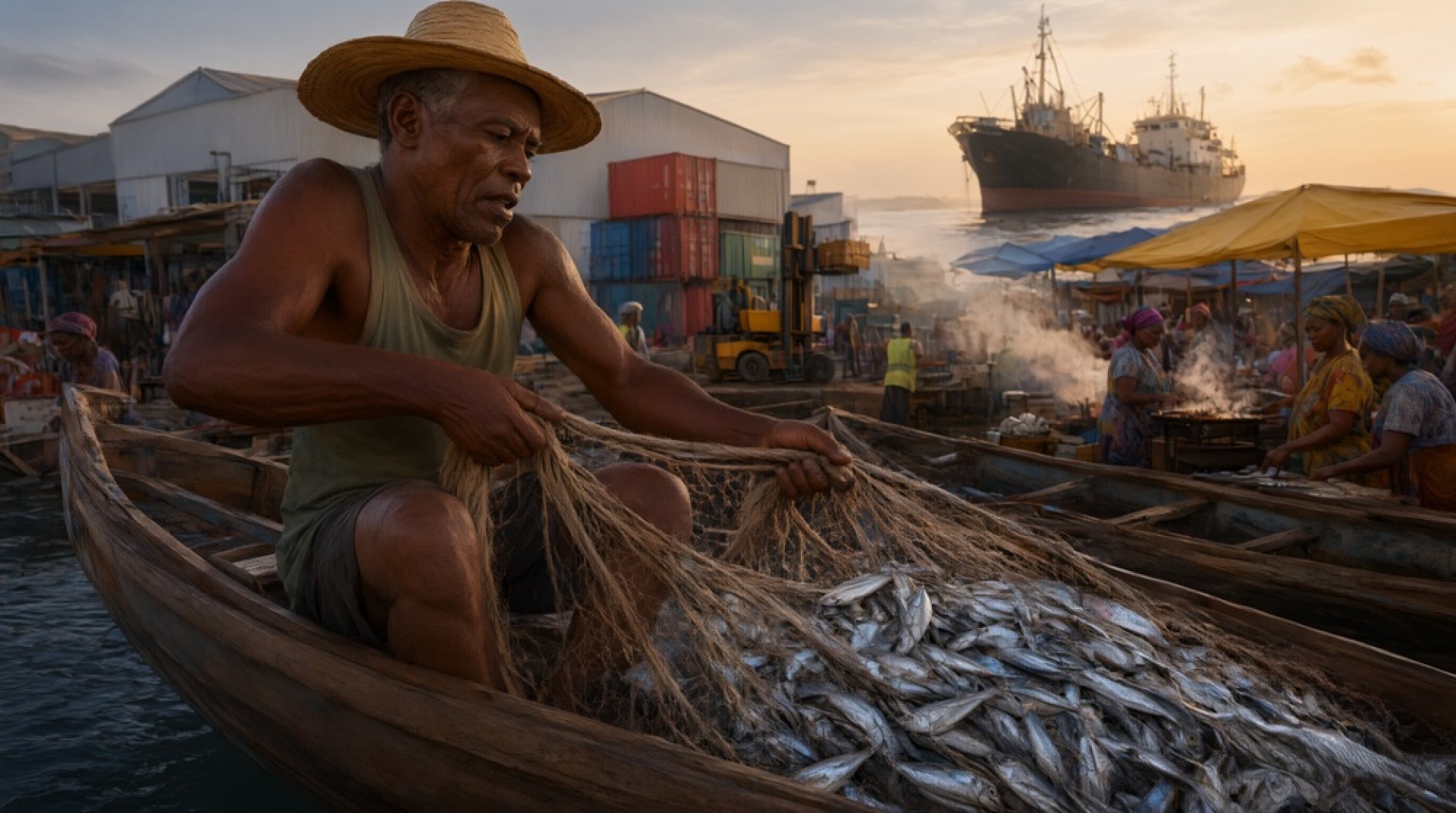
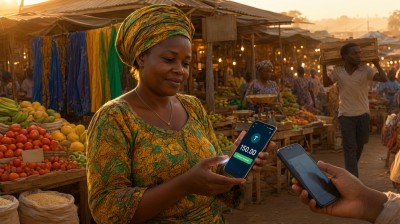
© PANAFA | AI-generated image

Thirty-eight African countries look out onto the sea or the ocean, and the continent’s coastline stretches roughly 30,500 km (18,950 miles): by any geographic measure, Africa is a maritime continent. Yet when it comes to feeding itself from those waters, the numbers reveal a striking paradox.

How big is Africa’s aquaculture industry?

Africa’s aquaculture sector is the fastest growing among all the world’s regions: it has expanded more than five-fold since 2000, reaching approximately 2.5 million tons by 2022. Yet the continent still accounts for under 2 percent of global aquaculture volume. Per capita fish consumption is around 9 kg annually, less than half of the global average of 21 kg. More troubling still, there is a growing gap between production and consumption: merely to maintain current consumption levels, Africa’s aquatic food supply must grow by 74 percent by 2050.

What are the challenges facing Africa’s fishing sector?

The geography of African fish farming is highly concentrated. In 2024, Egypt alone produced 1.6 million tons of farmed aquatic animals – 66 percent of the continent’s total – followed by Nigeria, Uganda, Ghana and Zambia. Together, the five nations account for nearly 90 percent of Africa’s aquaculture output. This concentration is both an example of what is possible with the right policies and a warning about how much of the continent lags behind.

The reasons are numerous and persistent: high operating costs, unreliable supplies of quality fish feed, shortages of fingerlings, limited access to credit, and poor infrastructure. These constraints may be familiar to agricultural development, but they are compounded in Africa by fragmented markets and underinvestment in the infrastructure that makes industrial-scale aquaculture viable.

At the same time, aquatic foods provide nearly 19 percent of Africa’s animal protein supply, and in countries such as Ghana, Senegal, and Sierra Leone, fish accounts for more than half of animal protein intake. Fish farming is therefore vital to basic nutrition – and to the continent’s food sovereignty and economic independence.

How much can seaweed contribute to Africa’s economic growth?

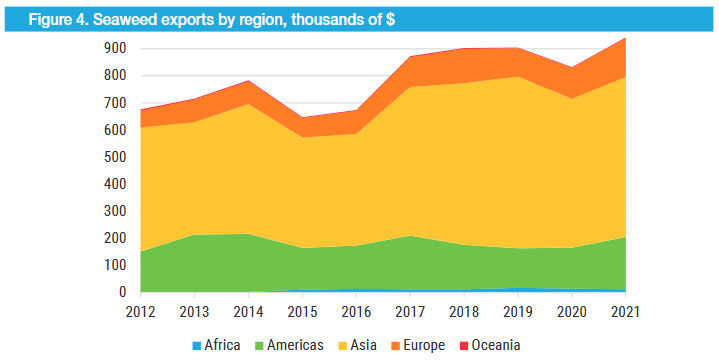
There is more to the continent’s blue-economy story than aquaculture. Africa produces 200,000 tons of seaweed annually, ranking second among continents in aquatic plant production, even though it accounts for only 0.5 percent of the global output. Tanzania, Madagascar, Kenya, South Africa, and Morocco lead the sector.
Source: UNCTAD, 2024

Seaweed farming requires no land, no fresh water, and no feed. It is, in principle, the most accessible form of mariculture available to coastal communities – but the economics are challenging. Farm-gate prices are low, profit margins narrow, and break-even can take years. These economic factors are compounded by environmental pressures – rising sea temperatures and crop disease outbreaks – as well as by limited access to finance. In Zanzibar, where seaweed is the second-largest crop export and supports the livelihoods of more than 150,000 people, the industry’s three-decade history – rooted in research by the University of Dar es Salaam – has produced a familiar African outcome: raw material exports with little value captured locally.

The Tanzanian government is now seeking to change this through investment in processing infrastructure, a shift that would allow the country to strengthen exports and increase earnings, improving livelihoods in Zanzibar’s coastal communities.

How are African countries moving to strengthen their food security?

The gap between potential and production has not gone unnoticed by policymakers. The African Union aims to grow Africa's blue economy to $405 billion by 2030, creating 57 million jobs. In West Africa – a region that still spends more than $2 billion annually importing fish and other aquatic foods – several countries have responded to this growth ambition by launching ambitious aquaculture development initiatives of their own. Ghana aims to double annual farmed fish production to nearly 239,000 tons by 2028 via its National Aquaculture Development Plan. Nigeria launched a financing initiative in June 2025 to improve fish farmers’ access to credit. Senegal unveiled a 36.5 billion CFA franc aquaculture development plan in May 2026, targeting 20,000 tons of annual production by 2030. And Côte d’Ivoire officially launched its ProDeCAP project in March 2026 to expand domestic fish production.

In East Africa, Kenya’s Blue Economy Strategy seeks to triple total fish output - combining aquaculture, deep-sea fishing, and value chains - to over 450,000 tons within five years. This kind of growth, if scaled across the continent, would serve not only to cut import dependence, but to position Africa’s freshwater and coastal systems at the center of a sustainable global seafood supply.

Is Africa ready to claim sovereignty over its water resources?

There is another dimension to food sovereignty that extends beyond farming: control of territorial waters. In November 2026, Mauritania ordered all European Union ships operating in its fishing zones to stop, following the expiry of a protocol in force since 2021. The EU-Mauritania partnership had existed since 1987. The decision was not an act of hostility, rather, an assertion of sovereignty over a resource that had long been exploited under terms that favored foreign fleets.

For a continent whose waters have been systematically harvested by distant-water vessels – sometimes illegally – Mauritania’s move raises a simple question: who benefits from African fish? If the answer is primarily European or Asian consumers, then the continent’s approach to food security needs rethinking.

Why does Africa need a Blue Economy strategy?

Africa’s fish and seaweed sectors offer high food-security potential, yet both remain under-scaled compared to global benchmarks. By 2034, the continent is projected to produce around 7 percent of aquatic animals globally, with output growing 13 percent compared to 2024, according to projections by the Food and Agriculture Organization of the United Nations (FAO). At the same time, its fish consumption over the next decade is projected to increase 24 percent. Simply put, Africa’s population is growing faster than its fish supply.

In the face of these unforgiving forecasts, the continent cannot continue to import a third of its aquatic food while its own farmers struggle. The policies emerging in West Africa, the processing ambitions in Zanzibar, and the assertion of coastal sovereignty in Mauritania are all necessary steps. If they can cohere on the continental level and scale as a strategy, Africa will be able to unlock its aquaculture potential, boost local output, strengthen food security, and create jobs.

Most read