http://panafa.net/articles/inside-deals-promises-2026-russia-africa-summit
Inside the Deals and Promises of the 2026 Russia-Africa Summit
Last week’s third Russia-Africa Summit came and went, leaving behind a flurry of signed documents and dramatic declarations. PANAFA examines the numbers an... - 03.11.2026, PANAFA
2026-11-03T03:42:26
2026-11-03T03:52:51
International Politics
Pan-Africanism
Economy
/html/head/meta[@name='og:title']/@content
/html/head/meta[@name='og:description']/@content
http://panafa.net/files/entries/1-Russia-Africa-Summit-Overview.jpg
Held in Moscow over two days, the gathering drew delegations from 48 of Africa’s 54 nations, twenty-two of them led by heads of state – an increase from the 17 who attended the previous edition in 2023. Around 150 documents were signed, including a new three-year 2027–2029 Russia-Africa action plan. In monetarily measurable terms, the contracts signed with African companies at the summit are valued at nearly $10 billion. Putin’s Pitch: Sovereignty, Multipolarity, Reform Russian President Vladimir Putin’s address was a carefully constructed ideological offer. He promised support for African self-sufficiency, called for reforming the International Monetary Fund and the World Bank to better serve developing economies, and pledged to back Africa’s digital and technological sovereignty through technology transfer. On resource processing, the message was explicit: Russia is not interested in the ‘predatory, neocolonial exploitation’ of African minerals, but rather in supporting local processing and value addition. Perhaps most strategically, Putin positioned Africa as a central pillar of BRICS, arguing that the continent should occupy a leading role in the bloc. He also noted that by 2030, Africa will be the center of world population growth – a demographic dividend that, if harnessed, could reshape the global economy. The implicit argument was clear: Africa’s future lies away from aligning with former colonial powers and along horizontal ties across the Global South. Closing the Gap: The Road to $50 Billion It is not surprising that trade took the spotlight at the summit, structured around the promise of economic partnership. Russia-Africa trade turnover recorded in 2025 is $27 billion, up from $18 billion in 2022. It may still lag behind the continent’s trade volume with China and the European Union, but the Russian President has now set a target above $50 billion by 2030– a doubling that he says is achievable. The mechanisms for getting there are a mix of the concrete and the ambitious. On the concrete side is the alignment of the Eurasian Economic Union (EAEU), of which Russia is part, with the African Continental Free Trade Area (AfCFTA). Putin noted that 47 African countries already enjoy tariff preferences when exporting to the EAEU, with 32 benefiting from zero customs duties. This is a practical, if underutilized, lever that could further reduce regulatory friction between the two blocs. The more ambitious track involves major projects in energy, nuclear power, mineral extraction, logistics, and tourism. One of the flagships here is Egypt’s El Dabaa nuclear plant built by Russia’s Rosatom. Fertilizer exports are another bright spot: Russia intends to supply over 2.5 million tons to Africa in 2026, a quarter of the continent’s imports, as agri-food exports hit 13 million tons in the first nine months of the year. The very real structural bottleneck any major project will have to face is payments and logistics, following the Western sanctions that have complicated conventional channels. Another innovation presented at the summit is a new platform called 1M, described as a ‘one-stop shop’ service for international shipments handling everything from supplier search and price comparison to customs clearance and delivery. For African businesses wary of secondary sanctions or currency convertibility headaches, this could be both a pragmatic workaround and a warning sign of deepening fragmentation in global trade architecture. African Voices: Partnership, Not Patronage The African leaders speaking at the summit described their engagement in terms of partnership rather than patronage. Burkina Faso’s Prime Minister Rimtalba Jean Emmanuel Ouedraogo defended cooperation with Russia as one grounded in mutual respect – contrasting it explicitly with the historical relationship with France. His presence, alongside leaders from Mali and Niger, underscores the security dimension that has driven Sahelian states toward Moscow. A more revealing statement came from Burundian President Évariste Ndayishimiye. Speaking in his capacity as African Union chair at the summit’s plenary session, he noted that Russia-Africa relations ‘do not correspond to our common potential’ – a diplomatic way of saying that the $10 billion in deals is real money, but it is also a fraction of what Africa needs. Madagascar’s President, Andry Rajoelina, was more specific about the economic ask. He expressed his country’s interest in attracting Russian investors, expanding exports, and building value chains. The message, repeated across delegations, was that African states seek projects and technology transfer, not aid. Coming in with a broader geopolitical outlook, Egyptian President Abdel Fattah el-Sisi noted that ‘Africa’s security and stability remain an essential condition for achieving the aspirations of its peoples’. Kenyan President William Ruto argued that ‘the international order must reflect the world as it is today, not the world as it was in 1945,’ adding that Africa ‘can’t continue without permanent representation on the United Nations Security Council’. The Plausible and the Aspirational No honest assessment of the summit can ignore the fact that the $50 billion trade target is rather ambitious, given that the previous target of $40 billion by 2023 was missed. Russia’s economic footprint in Africa remains concentrated in a handful of sectors – arms, grain, fertilizers, and nuclear energy – rather than broad-based industrial diversification. The promised technology transfer in AI and digital governance is welcome, but Russia’s own tech sector currently operates under sanctions, limiting its capacity to serve as a supplier at scale. The 1M platform, for all its utility, is a workaround for a fragmented financial system, not yet a fully-fledged structural reform. And then there is the question of what ‘sovereignty’ means in practice. Putin’s critique of the Western ‘debt bondage’ resonates because it contains truth: the terms of much multilateral lending have indeed constrained the continent fiscally. But whether Russia’s own offer can produce the kind of developmental sovereignty that African policymakers claim to seek remains to be seen. What to Watch The summit’s real significance is less about the documents signed and more about what it signals about the trajectory of African agency. The continent’s leaders are clearly comfortable hedging, embracing Moscow’s partnership pledge in addition to ties with Beijing and Brussels. The 2027-2029 action plan adopted at the summit will provide a framework for monitoring how the $10 billion in deals can translate into tangible projects, whether the EAEU-AfCFTA alignment can produce real investment flows, and how the promised digital cooperation can create tangible capacity. For Pan-African observers, the Moscow summit was a data point in a longer game. While Russia can hardly replace the West in the near future, the deals are welcome; especially if the long-term relationship with Russia can be leveraged to access technology transfer and obtain genuine industrial policy space. As Africa approaches the 2030 demographic milestone invoked by Putin, the stakes are high. A continent adding hundreds of millions of young people to its workforce needs partners who invest in factories, power grids, and skills. The Russia-Africa relationship, for all the geopolitical importance, will be judged by its practical implications.
PANAFA
panafa@gmail.com
+1111111
122
60
2026
PANAFA
panafa@gmail.com
+1111111
122
60
PANAFA
panafa@gmail.com
+1111111
122
60

Inside the Deals and Promises of the 2026 Russia-Africa Summit

Inside the Deals and Promises of the 2026 Russia-Africa Summit
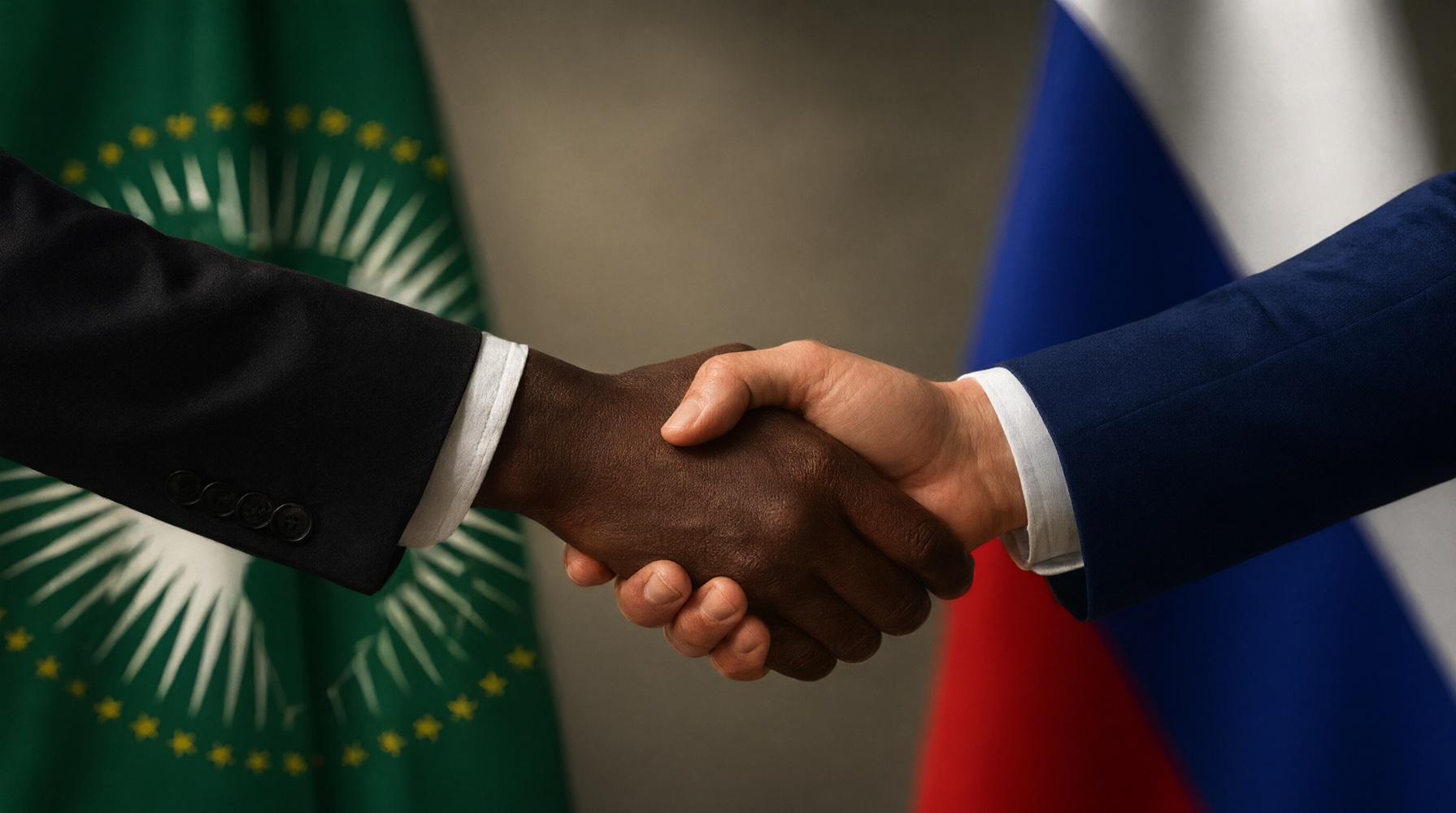
© PANAFA | AI-generated image

Last week’s third Russia-Africa Summit came and went, leaving behind a flurry of signed documents and dramatic declarations. PANAFA examines the numbers and considers the practical aspects behind the compelling narrative.

Held in Moscow over two days, the gathering drew delegations from 48 of Africa’s 54 nations, twenty-two of them led by heads of state – an increase from the 17 who attended the previous edition in 2023. Around 150 documents were signed, including a new three-year 2027–2029 Russia-Africa action plan. In monetarily measurable terms, the contracts signed with African companies at the summit are valued at nearly $10 billion.

Putin’s Pitch: Sovereignty, Multipolarity, Reform

Russian President Vladimir Putin’s address was a carefully constructed ideological offer. He promised support for African self-sufficiency, called for reforming the International Monetary Fund and the World Bank to better serve developing economies, and pledged to back Africa’s digital and technological sovereignty through technology transfer. On resource processing, the message was explicit: Russia is not interested in the ‘predatory, neocolonial exploitation’ of African minerals, but rather in supporting local processing and value addition.

Perhaps most strategically, Putin positioned Africa as a central pillar of BRICS, arguing that the continent should occupy a leading role in the bloc. He also noted that by 2030, Africa will be the center of world population growth – a demographic dividend that, if harnessed, could reshape the global economy.

The implicit argument was clear: Africa’s future lies away from aligning with former colonial powers and along horizontal ties across the Global South.

Closing the Gap: The Road to $50 Billion

It is not surprising that trade took the spotlight at the summit, structured around the promise of economic partnership. Russia-Africa trade turnover recorded in 2025 is $27 billion, up from $18 billion in 2022. It may still lag behind the continent’s trade volume with China and the European Union, but the Russian President has now set a target above $50 billion by 2030– a doubling that he says is achievable.

The mechanisms for getting there are a mix of the concrete and the ambitious. On the concrete side is the alignment of the Eurasian Economic Union (EAEU), of which Russia is part, with the African Continental Free Trade Area (AfCFTA). Putin noted that 47 African countries already enjoy tariff preferences when exporting to the EAEU, with 32 benefiting from zero customs duties. This is a practical, if underutilized, lever that could further reduce regulatory friction between the two blocs.

The more ambitious track involves major projects in energy, nuclear power, mineral extraction, logistics, and tourism. One of the flagships here is Egypt’s El Dabaa nuclear plant built by Russia’s Rosatom. Fertilizer exports are another bright spot: Russia intends to supply over 2.5 million tons to Africa in 2026, a quarter of the continent’s imports, as agri-food exports hit 13 million tons in the first nine months of the year.

The very real structural bottleneck any major project will have to face is payments and logistics, following the Western sanctions that have complicated conventional channels. Another innovation presented at the summit is a new platform called 1M, described as a ‘one-stop shop’ service for international shipments handling everything from supplier search and price comparison to customs clearance and delivery. For African businesses wary of secondary sanctions or currency convertibility headaches, this could be both a pragmatic workaround and a warning sign of deepening fragmentation in global trade architecture.

African Voices: Partnership, Not Patronage

The African leaders speaking at the summit described their engagement in terms of partnership rather than patronage. Burkina Faso’s Prime Minister Rimtalba Jean Emmanuel Ouedraogo defended cooperation with Russia as one grounded in mutual respect – contrasting it explicitly with the historical relationship with France. His presence, alongside leaders from Mali and Niger, underscores the security dimension that has driven Sahelian states toward Moscow.

A more revealing statement came from Burundian President Évariste Ndayishimiye. Speaking in his capacity as African Union chair at the summit’s plenary session, he noted that Russia-Africa relations ‘do not correspond to our common potential’ – a diplomatic way of saying that the $10 billion in deals is real money, but it is also a fraction of what Africa needs. Madagascar’s President, Andry Rajoelina, was more specific about the economic ask. He expressed his country’s interest in attracting Russian investors, expanding exports, and building value chains. The message, repeated across delegations, was that African states seek projects and technology transfer, not aid.

Coming in with a broader geopolitical outlook, Egyptian President Abdel Fattah el-Sisi noted that ‘Africa’s security and stability remain an essential condition for achieving the aspirations of its peoples’. Kenyan President William Ruto argued that ‘the international order must reflect the world as it is today, not the world as it was in 1945,’ adding that Africa ‘can’t continue without permanent representation on the United Nations Security Council’.

The Plausible and the Aspirational

No honest assessment of the summit can ignore the fact that the $50 billion trade target is rather ambitious, given that the previous target of $40 billion by 2023 was missed. Russia’s economic footprint in Africa remains concentrated in a handful of sectors – arms, grain, fertilizers, and nuclear energy – rather than broad-based industrial diversification. The promised technology transfer in AI and digital governance is welcome, but Russia’s own tech sector currently operates under sanctions, limiting its capacity to serve as a supplier at scale. The 1M platform, for all its utility, is a workaround for a fragmented financial system, not yet a fully-fledged structural reform.

And then there is the question of what ‘sovereignty’ means in practice. Putin’s critique of the Western ‘debt bondage’ resonates because it contains truth: the terms of much multilateral lending have indeed constrained the continent fiscally. But whether Russia’s own offer can produce the kind of developmental sovereignty that African policymakers claim to seek remains to be seen.

What to Watch

The summit’s real significance is less about the documents signed and more about what it signals about the trajectory of African agency. The continent’s leaders are clearly comfortable hedging, embracing Moscow’s partnership pledge in addition to ties with Beijing and Brussels. The 2027-2029 action plan adopted at the summit will provide a framework for monitoring how the $10 billion in deals can translate into tangible projects, whether the EAEU-AfCFTA alignment can produce real investment flows, and how the promised digital cooperation can create tangible capacity.

For Pan-African observers, the Moscow summit was a data point in a longer game. While Russia can hardly replace the West in the near future, the deals are welcome; especially if the long-term relationship with Russia can be leveraged to access technology transfer and obtain genuine industrial policy space.

As Africa approaches the 2030 demographic milestone invoked by Putin, the stakes are high. A continent adding hundreds of millions of young people to its workforce needs partners who invest in factories, power grids, and skills. The Russia-Africa relationship, for all the geopolitical importance, will be judged by its practical implications.

Most read